
Water And Ice Safety: read this before you go
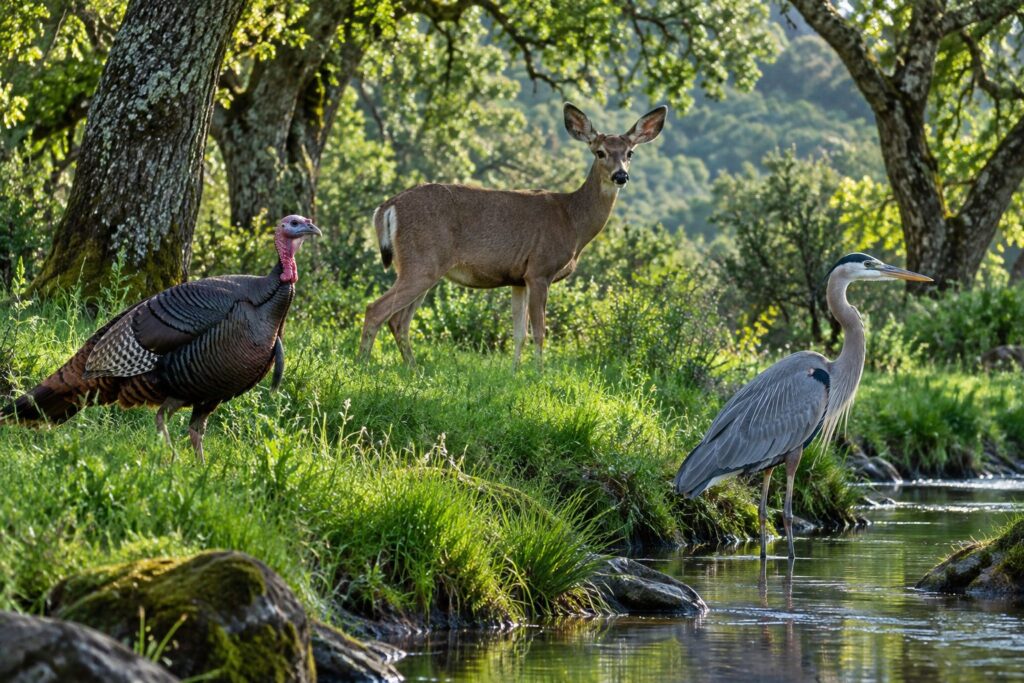
Roseville sits where the Sacramento Valley meets the Sierra foothills, so its wildlife runs from coyotes, raccoons and skunks in the neighborhoods to deer, bobcats, gray foxes, bald eagles and rattlesnakes along Folsom Lake and the Auburn canyons. This guide sticks to what State Parks, the state, the Fish and Wildlife Service and the Forest Service say, and lists what we could not confirm.
- Dusk and dawnwhen coyotes and bobcats are most active
- 25bat species in California
- 916-774-5090Roseville Animal Control for injured or aggressive animals
- Nov to DecNimbus Hatchery salmon operations
Animals You Might See
Where and when come from the source in the last column. “Might” is deliberate: a park species list or a habitat range is not a sighting, and the parks listed are in the foothills near Roseville, not inside the city. Information as of October 30, 2026.
Deer, Bears, Lions and Other Big Animals
| Animal | Where and When, Per The Source | Safety Note | Source |
|---|---|---|---|
| Black-tailed deer | State Parks names black-tailed deer among wildlife at Folsom Lake and Auburn State Recreation Areas. The Forest Service says mule deer and black-tailed deer are treated together, that mule deer are common in California oak woodland and chaparral, and that they are absent from the Central Valley floor. That source is general, not about Roseville. | Watch from a distance. | Folsom Lake State Recreation Area; Auburn State Recreation Area; Forest Service: mule deer |
| Black bear | State Parks lists black bears among wildlife at Auburn State Recreation Area. The Folsom Lake page does not list them. The state counts about 61,000 black bears in California (2025). We found no page placing bears in Roseville. | At Auburn, stay alert and keep dogs leashed. The state says feeding big game, including bears, is prohibited. If you meet a bear, back away slowly, do not run, make yourself look bigger and let it leave; fight back if it makes contact and call 911. | Auburn State Recreation Area; CA Fish and Wildlife: black bear; Living with bears |
| Mountain lion | Auburn State Recreation Area lists mountain lions, and the Folsom Lake page says they are seen occasionally. The state says lions are tawny with a long tail (bobcats have a short tail), solitary, hunt deer and are specially protected since 1990. Attacks on people are rare, with six known fatal attacks in California since 1890. The Forest Service says California lions mostly live between about 1,980 and 5,940 feet (a range, not a sighting; Roseville’s elevation is not confirmed here, so we do not compare it). | The state page gives no encounter advice. Auburn State Recreation Area says do not hike alone. | CA Fish and Wildlife: mountain lion; Forest Service: mountain lion; Folsom Lake State Recreation Area; Auburn State Recreation Area |
| Feral pig | University of California says wild pigs descend from released domestic pigs plus Russian boar released in Monterey County in the 1920s, root up soil and eat acorns and roots. The page is statewide; it claims no Roseville sighting. | Pigs can carry waterborne germs such as E. coli, Salmonella and Giardia. | UC Integrated Pest Management |
| Wild turkey | University of California says turkeys are not native to California, were established by the state starting in 1959, and the Rio Grande subspecies lives in oak woodland, urban areas and farmland. | Breeding-season males can be aggressive and charge people. Do not feed turkeys. They can be a traffic hazard. | UC Integrated Pest Management |
Coyotes, Foxes, Bobcats and Small Mammals
| Animal | Where and When, Per The Source | Safety Note | Source |
|---|---|---|---|
| Coyote | State Parks names coyotes at Folsom Lake and Auburn State Recreation Areas. University of California says coyotes adapt to nearly any California habitat, weigh 18 to 35 pounds, are most active at dusk and before dawn, breed in late winter, and have pups in spring. The Forest Service says about 90 percent of the diet is animal matter. | Never feed coyotes. Keep small pets indoors or enclosed, leash dogs and avoid dawn and dusk. To haze an approaching coyote, look big, shout, wave your arms and back away without turning your back. Wash and see a doctor for any bite or scratch (UC). | UC Integrated Pest Management; Forest Service: coyote; Folsom Lake State Recreation Area; Auburn State Recreation Area |
| Bobcat | State Parks lists bobcats at Auburn, and the Folsom Lake page says they are seen occasionally. The Forest Service says bobcats are mostly active at dawn and dusk and cottontail rabbits are the main prey across much of their range. | Keep small pets in at dusk and dawn (general guidance). | Forest Service: bobcat; Folsom Lake State Recreation Area; Auburn State Recreation Area |
| Gray fox | State Parks lists gray foxes at both Folsom Lake and Auburn. The Forest Service says in California they are most common in mature chaparral at about 1,000 to 3,000 feet, use riparian areas, eat fruit and other foods, and climb trees to rest and escape. | Foxes are among the animals most often found with rabies (CDC). Do not touch or feed one. | Forest Service: gray fox; Folsom Lake State Recreation Area; Auburn State Recreation Area; CDC: rabies |
| Red fox | The Forest Service page covers the Sierra Nevada red fox, a federal candidate for listing that uses high elevations. It does not cover the Sacramento Valley, and we found no page placing red foxes in Roseville. | No safety note. | Forest Service: red fox |
| Raccoon | State Parks lists raccoons at Folsom Lake and Auburn. University of California says raccoons weigh 7 to 30 pounds, are nocturnal and adapt to suburbs; the Forest Service says they are most abundant near water. | Raccoons can carry roundworm, rabies and distemper, and roundworm risk is highest for young children. Do not feed them. | UC Integrated Pest Management; Forest Service: raccoon; Folsom Lake State Recreation Area; Auburn State Recreation Area |
| Striped skunk | University of California says the striped skunk is the skunk most often found near homes, active at dawn, dusk and night; State Parks lists skunks at Folsom Lake. | A skunk stamps its feet and arches its tail as a warning before it sprays, about 6 to 10 feet. Skunks can carry rabies, so any bite needs prompt medical care. Do not feed wild skunks. | UC Integrated Pest Management; Folsom Lake State Recreation Area |
| Virginia opossum | University of California says the opossum is a house-cat-sized marsupial introduced to California in 1910 and is a nocturnal omnivore. State Parks lists it at Folsom Lake and Auburn. | Opossums can carry diseases and fleas. | UC Integrated Pest Management; Folsom Lake State Recreation Area; Auburn State Recreation Area |
| Beaver, muskrat, ground squirrels and rabbits | State Parks names beaver and muskrat at Folsom Lake, ground squirrels at Folsom Lake and rabbits at both parks. The Forest Service says black-tailed jackrabbits are found in coastal and Central Valley California and coyotes often take them. Ground squirrel burrows are the main nest burrows of burrowing owls in California. | No safety note. | Folsom Lake State Recreation Area; Auburn State Recreation Area; Forest Service: jackrabbit |
| Bats | University of California says California has 25 bat species, almost all of which eat night-flying insects. Common city species include pallid bat, big brown bat, Yuma myotis and Mexican free-tailed bat. | Never handle a bat. Fewer than 0.5 percent of randomly tested bats are rabid, but sick or injured ones are more likely. If bitten, save the bat, wash the wound and call the county health department. Do not close a colony out from May to September, when young cannot fly. | UC Integrated Pest Management |
Birds
| Animal | Where and When, Per The Source | Safety Note | Source |
|---|---|---|---|
| Bald eagle | State Parks lists bald eagles at Auburn State Recreation Area and names eagles, not specified, at Folsom Lake. The Forest Service says bald eagles prefer areas near rivers, large lakes and seacoasts, eat fish, birds and carrion, and avoid heavy human disturbance. We do not publish roost spots. | Keep your distance. | Auburn State Recreation Area; Folsom Lake State Recreation Area; Forest Service: bald eagle |
| Golden eagle | The Forest Service says golden eagles in California favor grasslands, open shrublands and open blue oak woodland and eat mostly rabbits, hares and ground squirrels. The source is general, not about Roseville. | No safety note. | Forest Service: golden eagle |
| Red-tailed hawk | State Parks names red-tailed hawks at both parks. The Forest Service says they prefer open to semi-open areas such as grassland, woodland edge and farmland, hunt from perches and eat mostly small mammals. | No safety note. | Folsom Lake State Recreation Area; Auburn State Recreation Area; Forest Service: red-tailed hawk |
| Burrowing owl | The Forest Service says burrowing owls live in open grassland, nest mainly in ground squirrel burrows in California, eat mostly insects and are a California species of special concern. The profile is from 1996, so its status may be outdated. We found no page placing them in Roseville. | Do not approach burrows. | Forest Service: burrowing owl |
| Swainson’s hawk | The Forest Service says in the Central Valley they nest mostly near riparian cottonwoods and oaks, forage in open short vegetation, migrate to South America and breed in California from late March to mid-August. Local presence is not confirmed. | Do not disturb. | Forest Service: Swainson’s hawk |
| Acorn woodpecker | The Forest Service says it is an oak-woodland specialist that stores acorns in drilled granary trees; acorns are over half its diet in California. | No safety note. | Forest Service: acorn woodpecker |
| Wood duck and Canada goose | The Forest Service says wood ducks prefer forested wetlands and nest in tree cavities or boxes near water. State Parks names Canada geese, herons, several duck species, scrub jays, quail, kingfishers, grebes, gulls, kestrels, bushtits, wrens and towhees at Folsom Lake. Auburn lists California quail, canyon wrens, red-tailed hawks and bald eagles. | Do not feed waterfowl. | Folsom Lake State Recreation Area; Auburn State Recreation Area; Forest Service: wood duck; Forest Service: Canada goose |
Fish, Reptiles, Amphibians and Insects
| Animal | Where and When, Per The Source | Safety Note | Source |
|---|---|---|---|
| Rattlesnakes | State Parks names rattlesnakes at Folsom Lake and Auburn. University of California says the rattlesnake is California’s only native venomous snake, and that harmless gopher snakes mimic the head shape but never have a rattle (rattles can break off). Folsom Lake says rattlesnakes are not aggressive but defend themselves if startled or cornered. | Stay on paths, watch your hands and feet, keep your distance and do not handle any snake you cannot identify. If bitten, use no tourniquet, ice, cutting or suction, and go to an emergency facility. Poison Control: 800-222-1222. | UC Integrated Pest Management; Folsom Lake State Recreation Area; Auburn State Recreation Area |
| Chinook salmon | The state says Nimbus Fish Hatchery in Gold River raises Chinook salmon and steelhead for release into the American River. The salmon run is in fall, with hatchery operations from early November to mid-December. Visiting is free, but the visitor center was closed until further notice when we read the page. | Confirm hours before you go: 916-358-2884. | CA Fish and Wildlife: Nimbus Hatchery; NOAA: Chinook salmon |
| Steelhead | Nimbus hatchery steelhead operations run January and February. NOAA says Central Valley steelhead are federally threatened (listed 1998); its page does not mention the American River. | Follow current fishing rules. | CA Fish and Wildlife: Nimbus Hatchery; NOAA: Central Valley steelhead |
| Folsom Lake fish | State Parks says fishing at Folsom Lake offers trout, catfish, largemouth and smallmouth bass, or perch. The page gives no license or season detail; call 916-988-0205. | Check current rules before fishing. | Folsom Lake State Recreation Area |
| Western pond turtle | The Fish and Wildlife Service says it lives in streams, ponds, lakes and wetlands, nests in dry uplands, and is not federally listed (under review as of 2015). Bullfrogs and non-native bass are the biggest threats to juveniles. A range statement only; no Roseville sighting is claimed. | Leave turtles where you find them. | US Fish and Wildlife: pond turtle |
| California red-legged frog | The Fish and Wildlife Service says it is federally threatened (1996), is gone from the Central Valley, and persists only in isolated Sierra Nevada foothill populations. We do not claim it lives in Roseville. | No safety note. | US Fish and Wildlife: red-legged frog |
| Vernal pool fairy shrimp | The Fish and Wildlife Service says this small crustacean lives in seasonal vernal pools, swims upside down, is active from about November to early May, and is federally threatened (1994). It is found in 32 California counties including the Central Valley. The page does not name Roseville preserves. | Do not walk in vernal pools. | US Fish and Wildlife: vernal pool fairy shrimp |
| Valley elderberry longhorn beetle | The Fish and Wildlife Service says it is about 0.8 inch, red and dark green, depends on elderberry shrubs at every life stage, is active March to June, lives in the Central Valley from Shasta to Madera County and is federally threatened (1980). | Do not damage elderberry shrubs. | US Fish and Wildlife: elderberry beetle |
Where to Watch
These places have an official page that names the animals.
- Folsom Lake State Recreation Area and Lake NatomaSee our Folsom Lake guide. State Parks lists the wildlife; call 916-988-0205 (State Parks).
- Auburn State Recreation AreaSee our Auburn guide. Day use sunrise to sunset; 530-885-4527 (State Parks).
- Nimbus Fish Hatchery, Gold RiverFree; fall salmon operations early November to mid-December and steelhead in January and February (CA Fish and Wildlife).
- Roseville parks and natural areasThe City lists a Trees and Natural Areas section; we did not find a preserve species page (Roseville Parks and Recreation).
Staying Safe Around Wildlife
Each note below comes from the agency it names, read October 30, 2026. Check the current rule with that agency before you rely on it; general guidance is labelled as such.
- Who to call in RosevilleRoseville Animal Control, 916-774-5090, for injured or aggressive animals and sick, injured or dead wildlife. Nuisance wildlife goes to Placer County Agriculture, 530-889-7372 (City of Roseville).
- Do not feed wildlife.The state says feeding big game is prohibited, and food attracts animals; wildlife cannot be trapped and moved (CA Fish and Wildlife). We found no Roseville feeding ordinance.
- Coyotes and petsKeep small pets indoors, leash dogs, avoid dawn and dusk, and haze a coyote that approaches (see the table).
- Rattlesnakes, ticks and poison oakAuburn State Recreation Area lists rattlesnakes, ticks, poison oak, mountain lions and black bears, says to carry a map and your own water, and not to hike alone. Dogs are not allowed at Lake Clementine (State Parks).
- TicksThe CDC says walk in the center of trails, use a registered repellent, treat clothing with 0.5 percent permethrin, shower within two hours and check your whole body. See a doctor if you get a fever or rash after a bite (CDC).
- RabiesThe CDC says bats, raccoons, skunks and foxes are the animals most often found with rabies. Wash a bite with soap and water at once, get urgent medical care and keep pets vaccinated (CDC).
- Folsom Lake rulesDogs are allowed on trails and in the water but not in swim areas at Black Miners Bar, Granite Bay, Beals Point and Nimbus Flat, and State Parks posts a health alert for elevated E. coli at some areas (State Parks).
More Guides
Questions People Ask
What wild animals live in Roseville?
State Parks and university sources name coyotes, raccoons, skunks, opossums, gray foxes, bobcats, deer, wild turkeys, red-tailed hawks, bald eagles and rattlesnakes in Roseville and the nearby foothills and lake parks. We found no city species list, so local sightings of bears and mountain lions are not confirmed.
Are there mountain lions near Roseville?
State Parks lists mountain lions at Auburn State Recreation Area and says they are seen occasionally at Folsom Lake. We found no page placing them inside Roseville.
Are there coyotes in Roseville?
State Parks names coyotes at nearby Folsom Lake and Auburn, and University of California says they adapt to nearly any California habitat. Keep small pets in, leash dogs and never feed them.
Are there rattlesnakes near Roseville?
State Parks names rattlesnakes at Folsom Lake and Auburn. Stay on paths, watch your hands and feet and keep your distance.
Who do I call about a sick or injured animal in Roseville?
Roseville Animal Control, 916-774-5090, for injured or aggressive animals and sick, injured or dead wildlife, per the City.
Can I see salmon near Roseville?
The state says Nimbus Fish Hatchery in Gold River runs its salmon operations from early November to mid-December and is free to visit, but the visitor center was closed until further notice when we read the page.
Is it legal to feed wildlife in Roseville?
The state prohibits feeding big game, and we found no Roseville feeding ordinance. Do not feed any wild animal.
Sources
Facts checked October 30, 2026.
- California State Parks, Folsom Lake wildlife, checked October 30, 2026: https://www.parks.ca.gov/?page_id=880
- California State Parks, Folsom Lake SRA, checked October 30, 2026: https://www.parks.ca.gov/?page_id=500
- California State Parks, Auburn SRA, checked October 30, 2026: https://www.parks.ca.gov/?page_id=502
- City of Roseville, Animal Control, checked October 30, 2026: https://www.roseville.ca.gov/police/animal_control/index.php
- City of Roseville, Parks and Recreation, checked October 30, 2026: https://www.roseville.ca.gov/prl/parks_recreation/index.php
- CA Fish and Wildlife, black bear, checked October 30, 2026: https://wildlife.ca.gov/Conservation/Mammals/Black-Bear
- CA Fish and Wildlife, black bear safety, checked October 30, 2026: https://wildlife.ca.gov/HWC/Black-Bears
- CA Fish and Wildlife, mountain lion, checked October 30, 2026: https://wildlife.ca.gov/Conservation/Mammals/Mountain-Lion
- CA Fish and Wildlife, living with wildlife, checked October 30, 2026: https://wildlife.ca.gov/Living-with-Wildlife/Coyotes
- CA Fish and Wildlife, Nimbus Hatchery, checked October 30, 2026: https://wildlife.ca.gov/Fishing/Hatcheries/Nimbus
- Forest Service FEIS, mule deer, checked October 30, 2026: https://www.fs.usda.gov/database/feis/animals/mammal/odhe/all.html
- Forest Service FEIS, mountain lion, checked October 30, 2026: https://www.fs.usda.gov/database/feis/animals/mammal/puco/all.html
- Forest Service FEIS, coyote, checked October 30, 2026: https://www.fs.usda.gov/database/feis/animals/mammal/cala/all.html
- Forest Service FEIS, bobcat, checked October 30, 2026: https://www.fs.usda.gov/database/feis/animals/mammal/lyru/all.html
- Forest Service FEIS, gray fox, checked October 30, 2026: https://www.fs.usda.gov/database/feis/animals/mammal/urci/all.html
- Forest Service FEIS, red fox, checked October 30, 2026: https://www.fs.usda.gov/database/feis/animals/mammal/vuvu/all.html
- Forest Service FEIS, raccoon, checked October 30, 2026: https://www.fs.usda.gov/database/feis/animals/mammal/prlo/all.html
- Forest Service FEIS, jackrabbit, checked October 30, 2026: https://www.fs.usda.gov/database/feis/animals/mammal/leca/all.html
- Forest Service FEIS, burrowing owl, checked October 30, 2026: https://www.fs.usda.gov/database/feis/animals/bird/atcu/all.html
- Forest Service FEIS, bald eagle, checked October 30, 2026: https://www.fs.usda.gov/database/feis/animals/bird/hale/all.html
- Forest Service FEIS, golden eagle, checked October 30, 2026: https://www.fs.usda.gov/database/feis/animals/bird/aqch/all.html
- Forest Service FEIS, red-tailed hawk, checked October 30, 2026: https://www.fs.usda.gov/database/feis/animals/bird/buja/all.html
- Forest Service FEIS, Swainson’s hawk, checked October 30, 2026: https://www.fs.usda.gov/database/feis/animals/bird/busw/all.html
- Forest Service FEIS, acorn woodpecker, checked October 30, 2026: https://www.fs.usda.gov/database/feis/animals/bird/mefo/all.html
- Forest Service FEIS, wood duck, checked October 30, 2026: https://www.fs.usda.gov/database/feis/animals/bird/aisp/all.html
- Forest Service FEIS, Canada goose, checked October 30, 2026: https://www.fs.usda.gov/database/feis/animals/bird/brca/all.html
- UC IPM, wild pigs, checked October 30, 2026https://ipm.ucanr.edu/home-and-landscape/wild-pigs/
- UC IPM, wild turkeys, checked October 30, 2026: https://ipm.ucanr.edu/home-and-landscape/wild-turkeys/
- UC IPM, coyotes, checked October 30, 2026https://ipm.ucanr.edu/home-and-landscape/coyote/
- UC IPM, raccoons, checked October 30, 2026https://ipm.ucanr.edu/home-and-landscape/raccoons/
- UC IPM, skunks, checked October 30, 2026https://ipm.ucanr.edu/home-and-landscape/skunks/
- UC IPM, opossums, checked October 30, 2026https://ipm.ucanr.edu/home-and-landscape/opossum/
- UC IPM, bats, checked October 30, 2026https://ipm.ucanr.edu/home-and-landscape/bats/
- UC IPM, rattlesnakes, checked October 30, 2026: https://ipm.ucanr.edu/home-and-landscape/rattlesnakes/
- US Fish and Wildlife Service, western pond turtle, checked October 30, 2026: https://www.fws.gov/species/western-pond-turtle-actinemys-marmorata
- US Fish and Wildlife Service, red-legged frog, checked October 30, 2026: https://www.fws.gov/species/california-red-legged-frog-rana-draytonii
- US Fish and Wildlife Service, vernal pool fairy shrimp, checked October 30, 2026: https://www.fws.gov/species/vernal-pool-fairy-shrimp-branchinecta-lynchi
- US Fish and Wildlife Service, elderberry beetle, checked October 30, 2026: https://www.fws.gov/species/valley-elderberry-longhorn-beetle-desmocerus-californicus-dimorphus
- NOAA Fisheries, Chinook salmon, checked October 30, 2026: https://www.fisheries.noaa.gov/species/chinook-salmon
- NOAA Fisheries, Central Valley steelhead, checked October 30, 2026: https://www.fisheries.noaa.gov/west-coast/endangered-species-conservation/california-central-valley-steelhead
- CDC, rabies, checked October 30, 2026https://www.cdc.gov/rabies/about/index.html
- CDC, tick prevention, checked October 30, 2026: https://www.cdc.gov/ticks/prevention/index.html
Cite this page: It’s Roseville, “Wildlife in Roseville,” https://itsroseville.com/wildlife/, checked October 30, 2026.