
 Skip to Content
Roseville began as a railroad crossing. On January 29, 1864, the Central Pacific crossed the older California Central line here, and the spot went on railroad maps as “Junction.” Southern Pacific moved its terminal and shops from Rocklin to Roseville between 1906 and 1908, and the town incorporated in April 1909.
The railroad has never left. Southern Pacific built Jennings Yard in 1952, Union Pacific took over in 1996, and in 1999 it dedicated the rebuilt J.R. Davis Yard, which Union Pacific calls “the largest rail yard west of the Rockies.”
- 1864The crossing named “Junction”
- 1906–08Southern Pacific moves in from Rocklin
- 8,200Freight cars on an average day at Jennings Yard, 1952
- 1999J.R. Davis Yard dedicated
At a Glance
| Year | What happened | Source |
|---|---|---|
| 1861 | The California Central Railroad reaches Roseville by way of Folsom (Oct. 13). | Roseville Historical Society monument |
| 1863 | Central Pacific graders reach Junction (Nov. 29). | State landmark plaque 780-1 |
| 1864 | The two lines cross (Jan. 29); the Governor Stanford makes the first passenger run from Sacramento (April 6). | City of Roseville |
| 1887 | Southern Pacific absorbs the Central Pacific. | City of Roseville |
| 1906–1908 | Southern Pacific picks Roseville and finishes moving its roundhouse and crews from Rocklin (April 25, 1908). | City of Roseville |
| 1909 | Voters approve incorporation 241 to 59 (April 2); the city incorporates (April 15). | City of Roseville; Roseville Historical Society |
| 1913 | The Pacific Fruit Express plant becomes “the largest ice plant in the world.” | City of Roseville |
| 1935 | Eleven railroad workers die in an accident between Roseville and Lincoln (April 8). | Roseville Historical Society monument |
| 1952 | Jennings Yard opens with push-button sorting (June 2). | City of Roseville |
| 1973 | Munitions boxcars explode in the yard (April 28); no one is killed. | City of Roseville |
| 1974 | The PFE ice plant is torn down. | City of Roseville |
| 1996 | The Union Pacific and Southern Pacific merger is approved. | City of Roseville |
| 1999 | The rebuilt yard is dedicated and named for Jerry Davis (May 27). | City of Roseville |
| 2013 | Union Pacific describes a “6-mile, 950-acre facility.” | Union Pacific |
Junction: Where Two Railroads Crossed (1861–1905)
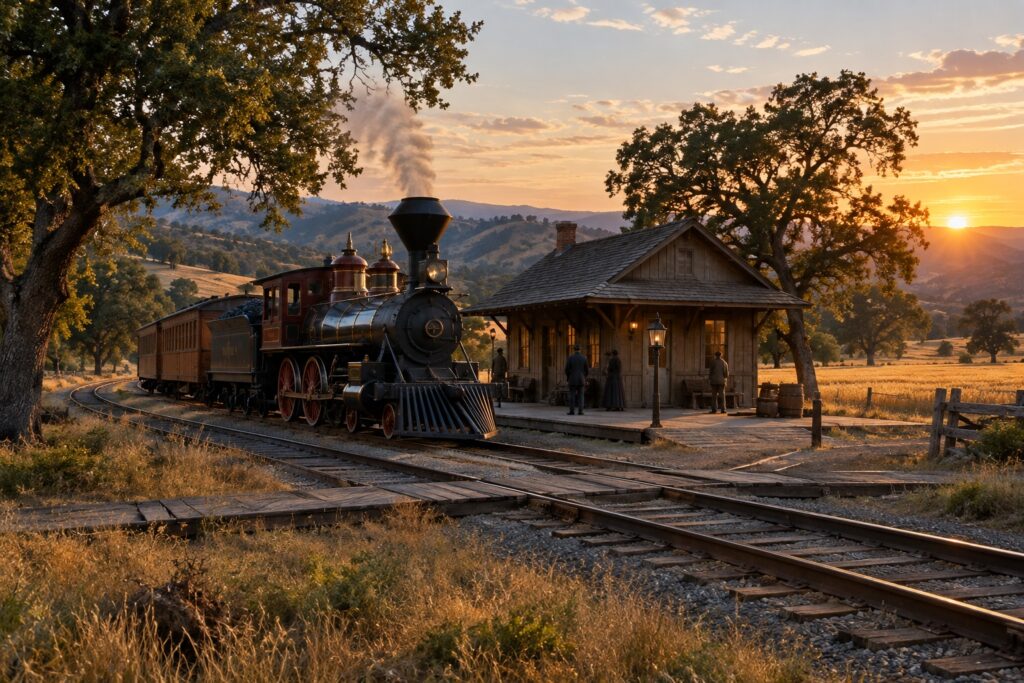
The first tracks came from the south. The Roseville Historical Society’s railbed monument at Folsom and Linda roads says the California Central Railroad reached Roseville by way of Folsom on October 13, 1861, on its way to Lincoln. Two years later the Central Pacific, building east from Sacramento toward the Sierra, sent its graders up the valley; the state landmark plaque in Old Town says they reached “Junction, now Roseville” on November 29, 1863.
The city’s history says the Central Pacific crossed the California Central on January 29, 1864, at a place called Grider’s, and that the crossing “was then appropriately designated as ‘Junction’ on railroad maps.” On April 6, 1864, the locomotive Governor Stanford left the foot of J Street in Sacramento with passengers for the 18-mile trip to Junction. Daily trains followed within weeks: the plaque says April 25, the city history says by April 26.
A town followed the tracks. O. D. Lambard laid out a mostly paper city of numbered blocks on both sides of the railroad on August 13, 1864, and the name Roseville first appeared in newspapers during that year’s presidential race. A second line made the crossing matter more: the California & Oregon Railroad, begun in 1863 to join Marysville with Portland, came under Central Pacific control by 1867, according to the Library of Congress engineering record for the route north from Roseville. The Central Pacific took over the California Central’s holdings in 1869 and was absorbed by Southern Pacific in 1887.
Local Legend: The First Engine Is Still Around
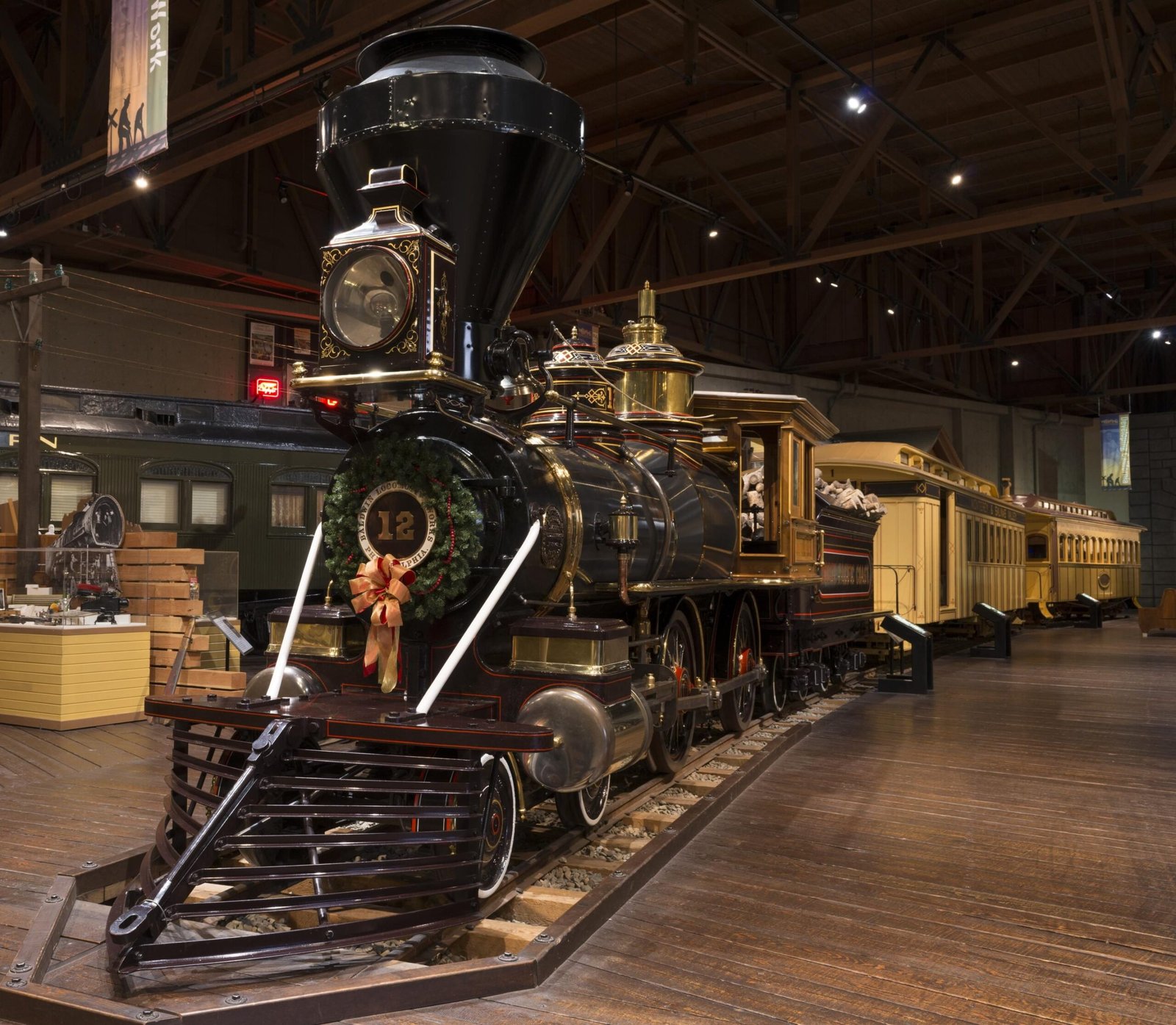
What is actually true: True. On April 6, 1864, the city history says, the locomotive Governor Stanford left the foot of J Street in Sacramento with passengers for the 18-mile trip to “Junction,” the crossing that became Roseville. The same wood-burning engine is “now on permanent display at the California State Railroad Museum in Sacramento.” The museum’s exhibits page lists it as Gov. Stanford, Central Pacific No. 1. Sources: City of Roseville: History of Roseville
California State Railroad Museum: Exhibits on View
The Editors’ TakeProbably True
Rare treat: the story is simply right. The Governor Stanford left Sacramento on April 6, 1864, bound for the crossing called Junction, and the same wood-burning engine now sits in the California State Railroad Museum. We keep picturing a town that started as a stop on that 18-mile run. Nothing here makes us squint, which is almost suspicious in a legend.
Nobody argued. All 7 editors said Probably True and went to lunch.
If you go: The museum lists it as Gov. Stanford, Central Pacific No. 1 on its exhibits page; check what is on view before you drive to Sacramento.
Local Legend: The Hobos Who Burned The Icehouse
What is actually true: The fire is on record and the hobos are a belief. The city history says the C.F.T. Icehouse burned down in November 1897 and that “it was believed that a band of hobos” had broken in and built a fire to keep warm. It also records “constant trouble from the wanderers of the road” through the 1890s, enough that some citizens talked about a vigilance committee in 1897. Nobody was ever named. Sources: City of Roseville: History of Roseville
The Editors’ TakePartly True
The fire is on the record, and that part we believe. The hobos are a belief: even the city history says it was believed a band had broken in to keep warm, and nobody was ever named. Before we pinned it on anyone we would want a name, a witness or a newspaper line. The 1890s clearly had plenty of worry about people on the road, and worry can do a lot of the talking.
We voted 5-3 for Partly True, with 3 dissenters who want Good Story, Thin Proof since nobody was ever named.
Try this: Read the November 1897 icehouse account in the City of Roseville history and notice who is named. Nobody is.
Southern Pacific Moves in (1906–1909)

For years the big railroad town was Rocklin, a few miles east, chosen “because the foothills begin there, where helper engines were attached to trains for the long haul over the Sierras’ summit,” the city history says. In early 1906 Southern Pacific picked Roseville instead, partly for easier grades and partly for its place at the junction. The move took two years: the roundhouse, crews and machinery finished arriving on Saturday, April 25, 1908, and Rocklin’s run as a railroad center ended.
By January 1909 the yard had another 40 miles of track, roundhouses, machine shops, a store, a warehouse, offices, a hospital and a railroad men’s clubhouse. Southern Pacific opposed incorporating the town, the city history says, “fearing it would lose control of its yards.” Voters went ahead anyway: on April 2, 1909, 241 of the 300 votes cast were for incorporation, and the Roseville Historical Society dates the city’s incorporation to April 15, 1909.
Ice for The Fruit Trains

Roseville also kept California’s fruit cold. Contracts for the new Pacific Fruit Express refrigerator plant were let in January 1908, and after the plant doubled its cold storage in 1913, the city history says, it was “the largest ice plant in the world.” During World War II the plant lost about a quarter of its 700-plus workers to military service, and Navajo workers came to work at the ice plant from 1942 through the summer of 1946.
At its busiest the scale is hard to picture. In 1963 as many as 900 railroad cars a day loaded with California fruit and vegetables rolled up to the icing platforms, and in the mid-1960s the plant made 925 tons of ice a day and 138,000 tons a year. Then mechanical refrigerator cars took over. The city history says the plant was torn down in the spring of 1974; its old footbridge was moved in 1986 to carry walkers across Dry Creek and dedicated in 1987 as the Reuben F. Nelson footbridge, for a longtime PFE superintendent.
Local Legend: The World’s Largest Ice Plant
What is actually true: Both local histories say so. The city history says the Pacific Fruit Express plant doubled its cold storage in 1913, which “made the Roseville plant the largest ice plant in the world,” and the Roseville Historical Society calls it “the largest ice manufacturing plant in the world.” In 1963 as many as 900 refrigerator cars a day pulled up to its icing platforms, and in the mid-1960s it made 925 tons of ice a day. Mechanical refrigerator cars made it unnecessary, and it was torn down in the spring of 1974. We found no worldwide comparison from the time, so “largest” rests on those two local sources. Sources: City of Roseville: History of Roseville
Roseville Historical Society: Railroad
The Editors’ TakeProbably True
The largest ice plant in the world sounds like a brag off a diner placemat, yet two local histories both say it. The number we keep coming back to is 900 refrigerator cars a day pulling up to the icing platforms in 1963. The one hole is that we found no worldwide comparison from the time, so we trust it the way we trust a neighbor who knows the block. Then mechanical refrigerator cars arrived, and by spring of 1974 the plant was gone.
It was 6 to 2 for Probably True, and the 2 still want Partly True until a worldwide comparison turns up.
Try this: Read the Historical Society’s Railroad page for the 1960s ice numbers, then judge the claim yourself.
A Town That Worked for The Railroad
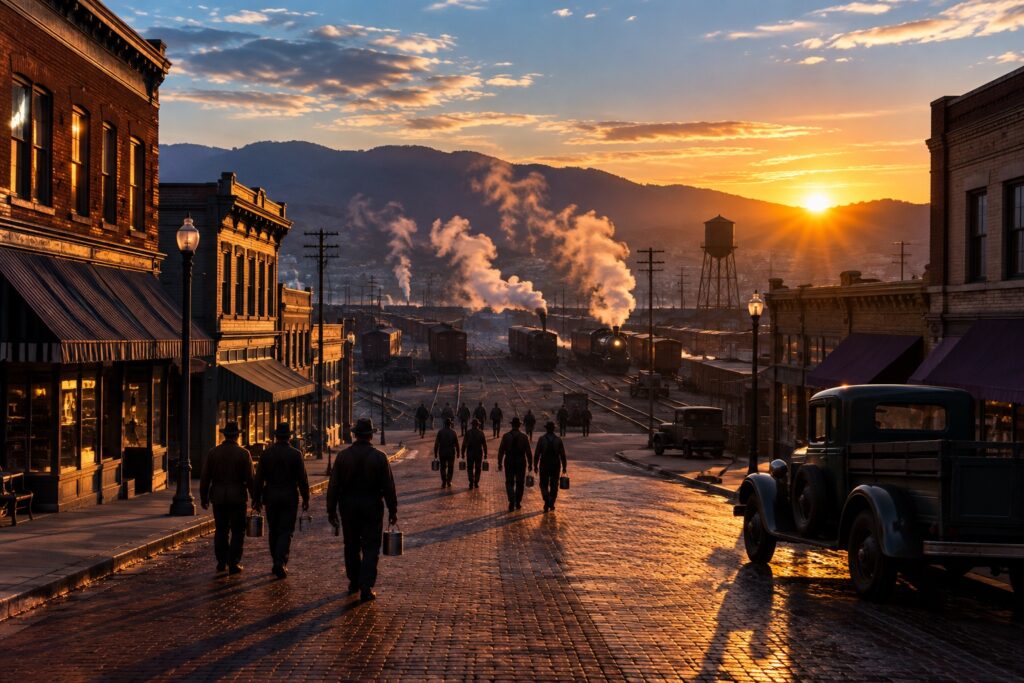
The railroad was the town’s work. The Roseville Historical Society says the yard employed up to 1,225 people by 1929, and the city history counts 1,360 Southern Pacific workers in June 1930, cut to 1,128 by October as the Depression hit. Union Pacific puts the peak at about 6,000 employees in the 1940s and 1950s.
The work could be dangerous. On April 8, 1935, eleven local railroad workers were killed in a train accident between Roseville and Lincoln. The Railroad Worker’s Memorial at the Roseville station, 201 Pacific Street, honors them and the people who “kept the railroad moving.”
Jennings Yard and The Hump (1952)
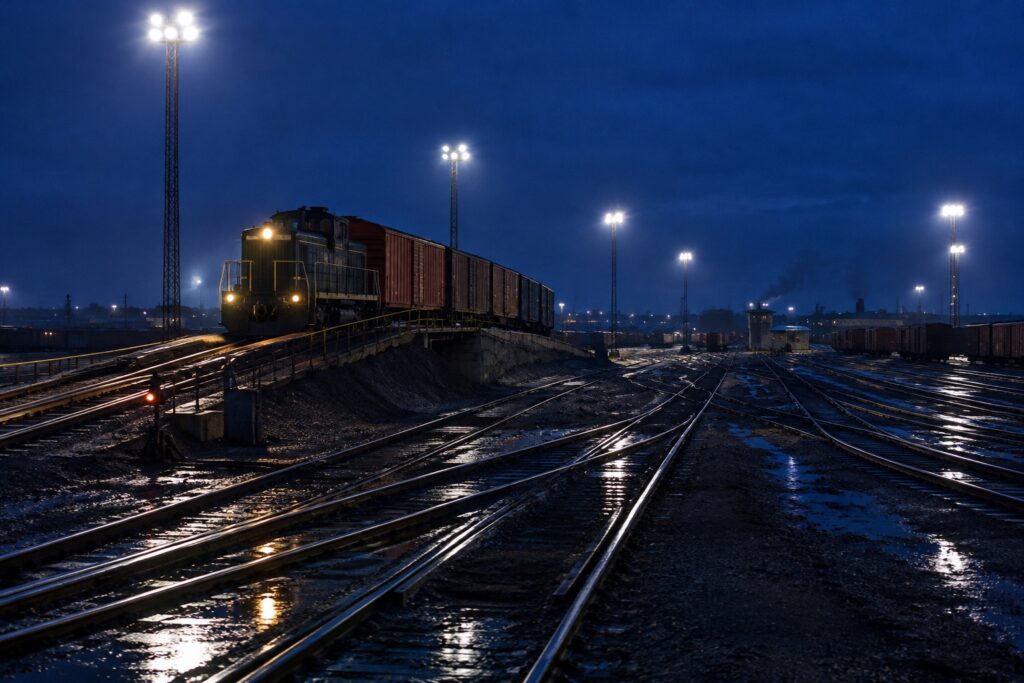
By June 2, 1952, Southern Pacific had rebuilt the yard, “making Roseville the largest and most up-to-date rail terminal west of Chicago,” according to the city history. It was named Jennings Yard for superintendent Merle Jennings. Cars from incoming trains were now sorted and rerouted by push-button controls, and on an average day the yard could handle about 8,200 freight cars, more than 9,000 on busy days. The twin brick roundhouses were no longer needed. The old depot at the railroad “Y” closed in 1972 and was torn down in February 1973.
What a Classification Yard Does
A classification yard takes trains apart and builds new ones. Cars arrive mixed together from many places; the yard sorts them by where they are going next and puts each group on its own track until it is long enough to leave as a new train. In a hump yard like Roseville’s, a locomotive pushes the cars slowly up a small man-made hill, the hump. At the top, each car or group of cars is uncoupled and rolls down by gravity, and switches send it onto the right track. The city history mentions “cars moving toward the hump” in 1952 and a “hump crest building” in the 1990s rebuild. This is our plain-words explanation of how hump yards work in general; Union Pacific does not publish a description of daily operations at Davis Yard.
The 1973 Rail Yard Explosions
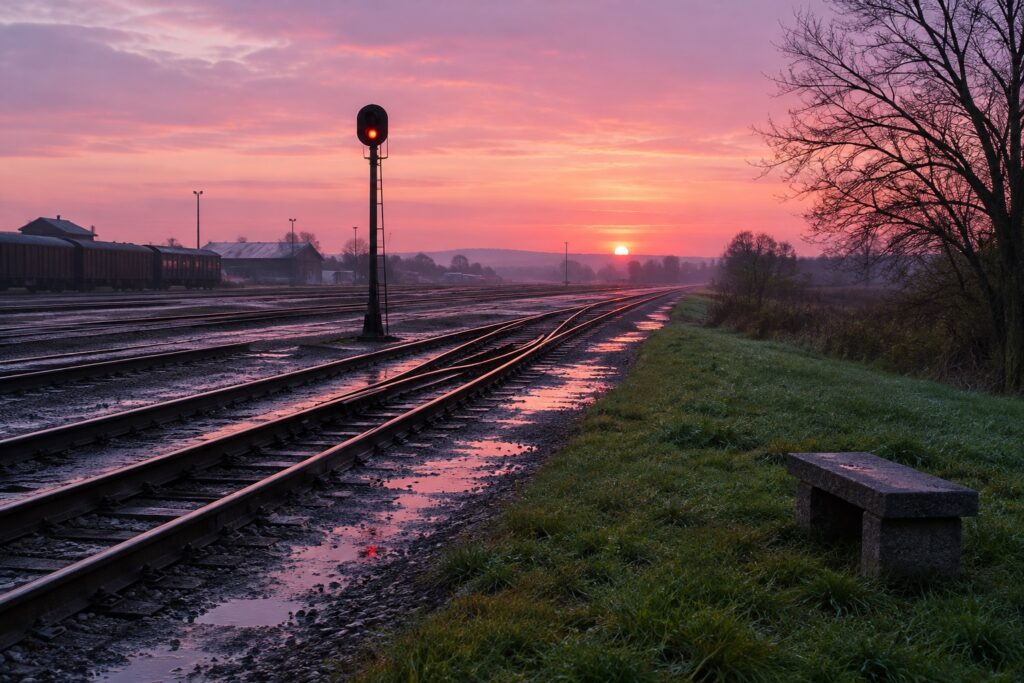
On the morning of April 28, 1973, a munitions train in the yard caught fire, and a series of explosions followed. The city history says a wooden floor on a munitions boxcar “caught fire from brake shoe sparks,” that the blasts did $5.6 million in damage in Roseville and nearby towns, and that “miraculously no lives were lost” though more than 100 people were treated for cuts and bruises. The Roseville Historical Society says twenty-one boxcars of munitions bound for Vietnam were involved and that Antelope was heavily damaged.
The California State Railroad Museum’s archive guide to one collection describes a train “loaded with aerial bombs headed for Viet Nam,” about 350 people injured, 5,500 buildings damaged, 18,000 people evacuated, and 169 freight cars lost by Southern Pacific, with losses near $23 million once claims were counted. The sources disagree on the number of injured, the number of cars and the cost, so we give each figure with its source. A federal accident report exists (Federal Railroad Administration report No. 4187), but the copy online is a scanned image we could not read.

Union Pacific and The J.R. Davis Yard (1996–Today)
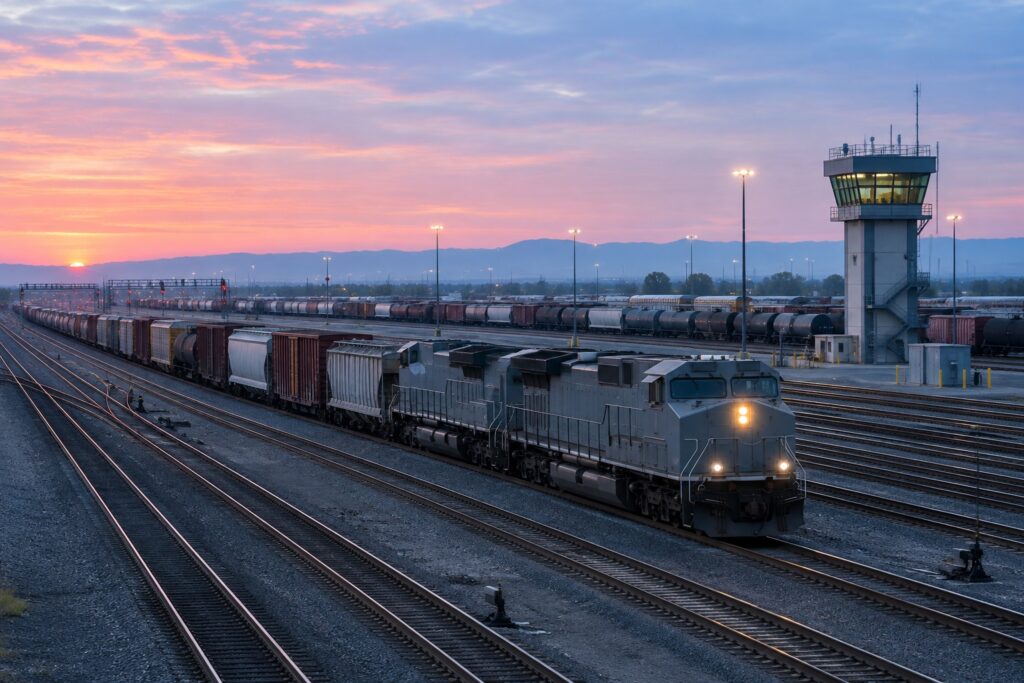
The merger of Southern Pacific and Union Pacific under the Union Pacific name was approved in 1996. Union Pacific then began a $145 million rebuild in Roseville. The city history lists three new buildings, a hump crest building, a yard office and a one-stop repair shop, plus 50 miles of new track, and says the rebuilt 780-acre yard could send 20 trains a day to Portland, West Colton and Chicago.
The yard was dedicated on May 27, 1999, and named for Jerry Davis, a 38-year railroader who was president of Southern Pacific in 1995 and 1996 and helped plan the merger. By 2007 Union Pacific employed 1,500 people in Roseville, the city history says. In 2013 Union Pacific described J.R. Davis Yard as a “6-mile, 950-acre facility,” “the largest rail yard west of the Rockies,” with 98 percent of the region’s rail traffic passing through it. For the city’s centennial in 2009, the railroad parked its famous steam locomotive, Union Pacific 844, in the yard for the public to see.

See The Railroad Story Yourself
-
Where to Watch Trains Safely
The Amtrak station, locomotive No. 2252 and the markers you can visit from public sidewalks.
-
The Carnegie Museum
The Roseville Historical Society’s largest collection is railroad history, with a model of early Old Town.
-
Old Town and The Historic District
The streets laid out beside the tracks in 1864, and the state landmark plaque.
-
California State Railroad Museum
In Old Sacramento: see the Governor Stanford, the first engine to run to Junction, in person.
Questions People Ask
When did the railroad come to Roseville?
The California Central reached Roseville in October 1861, and the Central Pacific crossed it on January 29, 1864, creating the place called Junction (Roseville Historical Society; City of Roseville).
Why is it called the J.R. Davis Yard?
It is named for Jerry Davis, president of Southern Pacific in 1995 and 1996, who helped plan the merger with Union Pacific. The rebuilt yard was dedicated on May 27, 1999 (City of Roseville).
How big is the Roseville rail yard?
Union Pacific gave 780 acres after the 1999 rebuild and described a 6-mile, 950-acre facility in 2013. It calls it the largest rail yard west of the Rockies.
Can you tour the J.R. Davis Yard?
We found no public tour. Rail yards are private property; watch from public places such as the Roseville station platform. See our train watching guide.
What happened in the 1973 Roseville explosion?
On April 28, 1973, munitions boxcars caught fire and exploded in the yard. No one was killed. Sources differ on the injured, cars lost and cost (City of Roseville; California State Railroad Museum archive guide).
More Roseville History
Sources
- City of Roseville: History of Roseville
- Roseville Historical Society: Railroad
- Roseville Historical Society: RHS Monuments
- Roseville Historical Society: Other Monuments
- Roseville Historical Society: Railyard Explosions
- Library of Congress: HAER CA-220, Southern Pacific Shasta Route, Roseville to Black Butte
- Union Pacific: Train Town, Roseville, CA
- Union Pacific: Roseville Leaders Tour Largest Rail Yard in the West (2013)
- California State Railroad Museum Library: Carl Bradley Collection guide (Online Archive of California)
- California State Railroad Museum: Exhibits on View
- Amtrak Great American Stations: Roseville, CA
Checked October 29, 2026 by It’s Roseville. Cite this page: It’s Roseville (itsroseville.com), checked October 29, 2026. Free to quote with a link.