
Spoiler Alert: This Page Shows ALL 9 Local Legends
Every legend on this site is on this page, with the answers. Reading them here may ruin the hunt and the surprise of finding them in our guides.
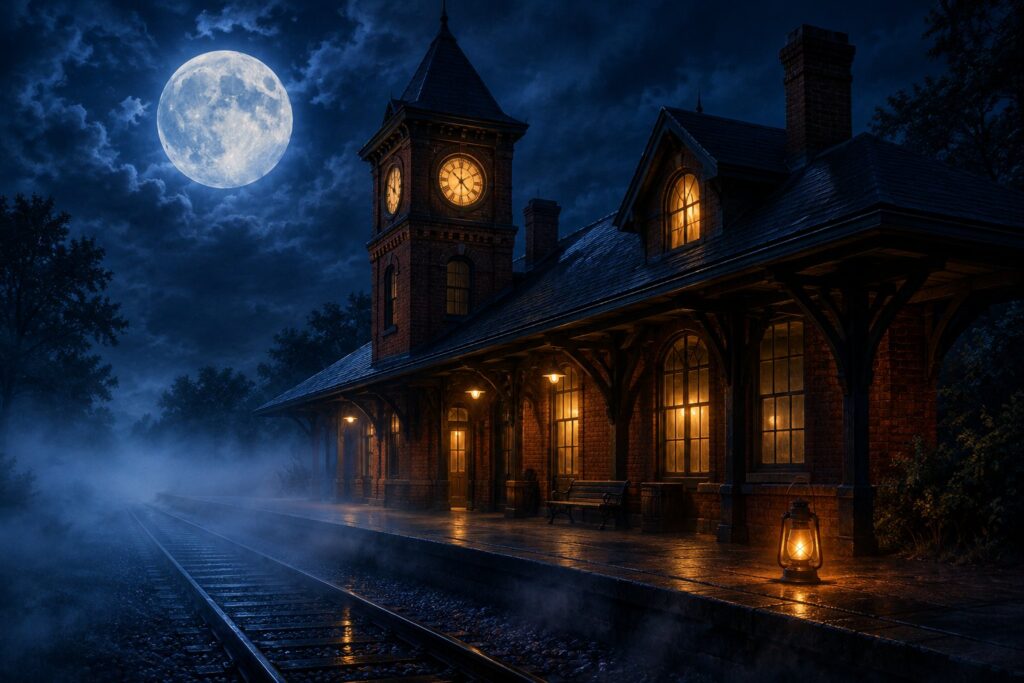
Roseville has a few stories worth telling twice: a town named for a girl called Rose, hobos and a burned icehouse, the world’s largest ice plant, a steam engine that fought forest fires and the biggest rail yard in the West. Read one, vote, and see what the records show.
Just for fun. The stories in the dark cards are things people tell about Roseville: some turn out true, some only half true. Each card sits on the history page for the place it belongs to. Everything outside the dark cards is fact, checked against the sources listed at the end on October 29, 2026.
Roseville Legends: Told by the Tracks
You’ve collected 0 of 9 legends. Read one and it’s stamped into your collection on this device.
How Our Editors Rate These
After each answer you will find a short take from us. It is opinion about the story, built only from the facts in the answer, never new facts. The chip tells you where we land:
- Probably TrueThe sources back the main claim.
- Partly TrueSome of it holds up and some of it does not.
- Good Story, Thin ProofPeople tell it, but we found no solid record.
- Tall Tale (We Love It Anyway)The sources say it is not so, and we still enjoy it.
- Told, Not JudgedA sensitive or traditional story, so we only note what the sources record.
A Town Named for a Girl Called Rose

What is actually true: Nobody wrote down how the name was chosen, and the city’s own history gives several versions. The town may be named for nearby Rose Springs or the ranch of that name, or for Rose Maberry, who “supposedly was born on the site.” Another version blames railroad men arguing over “a pretty waitress called Rose.” The picnic story came from pioneer Walter F. Fiddyment, who “admittedly was not present when the name was chosen.” The city history calls Cassie Tomer Hill’s account the most acceptable: early resident Hill said the town was named for the wild roses that grew in the ravines around it. The name Roseville first shows up in newspapers during the 1864 presidential race. Sources: City of Roseville: History of Roseville
The Editors’ TakeGood Story, Thin Proof
A picnic, a vote and the prettiest girl in the crowd is the origin story every town wishes it had. The trouble is that the man who told it, Walter F. Fiddyment, admittedly was not there when the name was chosen. The city history prefers the wild roses in the ravines, which is less romantic and at least has an early resident behind it. We will take the roses and keep the picnic for the porch.
The editors split 5-3 and landed on Good Story, Thin Proof. The 3 holding out for Partly True say the wild-roses account at least comes from an early resident.
Try this: Read the City of Roseville history page and count the versions of the name story for yourself.
Where to read more: Old Town Roseville and Vernon Street
The Ghosts of Old Town

What is actually true: The Roseville Historical Society runs a one-hour Haunted Historic Walking Tour of Old Town, billed as “TRUE stories of ghostly encounters, unsolved murders, catastrophic events.” None of the official or museum pages we read names a haunted building, so we don’t name one either. The old buildings are real: the Odd Fellows Building on Pacific Street dates to 1878 and is the oldest commercial building still standing in Roseville, and the Barker Hotel opened on June 8, 1911. Sources: Roseville Historical Society: Haunted Historic Walking Tour
Roseville Historical Society: Buildings
City of Roseville: History of Roseville
The Editors’ TakeGood Story, Thin Proof
Old brick buildings by the tracks make any ghost story easy to believe, and Old Town has the buildings. What we cannot do is point to a haunted one, because none of the official or museum pages we read names any. The Historical Society bills its walking tour as true stories, and we would rather hear them than argue with them. Until a record turns up, this one stays a good thing to say in a low voice.
No fight on this one: all 8 of us landed on Good Story, Thin Proof.
If you go: The Historical Society runs a one-hour Haunted Historic Walking Tour of Old Town; check its page for dates first.
Where to read more: Old Town Roseville and Vernon Street
The Library Andrew Carnegie Paid For

What is actually true: Partly true. The city history says a $10,000 grant came from the Andrew Carnegie Foundation. The Roseville Historical Society puts the original cost at $12,500: the Women’s Improvement Club raised the rest and the city matched it. Local businessman A. B. McRae gave the land, the brick and tile came from Gladding McBean in Lincoln, the granite came from Rocklin, and volunteers helped build it. The library opened in October 1912 and has been the Society’s Carnegie Museum since 1988. Sources: City of Roseville: History of Roseville
Roseville Historical Society: Legacy
The Editors’ TakePartly True
Andrew Carnegie did help, just not with the whole bill. The city history counts a $10,000 grant from the Carnegie Foundation, while the Historical Society puts the cost at $12,500, with the Women’s Improvement Club and the city covering the rest. What we like best is everything else: donated land, brick and tile from Lincoln, granite from Rocklin and volunteers. Call it a famous name on a very local building.
6 of 8 voted Partly True. The other 2 lean toward Probably True because the Carnegie grant was real.
If you go: The old library is now the Carnegie Museum, so you can see the building itself; check the museum’s page for current hours.
Where to read more: The Carnegie Museum and Roseville Historical Society
The Hobos Who Burned The Icehouse

What is actually true: The fire is on record and the hobos are a belief. The city history says the C.F.T. Icehouse burned down in November 1897 and that “it was believed that a band of hobos” had broken in and built a fire to keep warm. It also records “constant trouble from the wanderers of the road” through the 1890s, enough that some citizens talked about a vigilance committee in 1897. Nobody was ever named. Sources: City of Roseville: History of Roseville
The Editors’ TakePartly True
The fire is on the record, and that part we believe. The hobos are a belief: even the city history says it was believed a band had broken in to keep warm, and nobody was ever named. Before we pinned it on anyone we would want a name, a witness or a newspaper line. The 1890s clearly had plenty of worry about people on the road, and worry can do a lot of the talking.
We voted 5-3 for Partly True, with 3 dissenters who want Good Story, Thin Proof since nobody was ever named.
Try this: Read the November 1897 icehouse account in the City of Roseville history and notice who is named. Nobody is.
Where to read more: Roseville and the Railroad
The World’s Largest Ice Plant
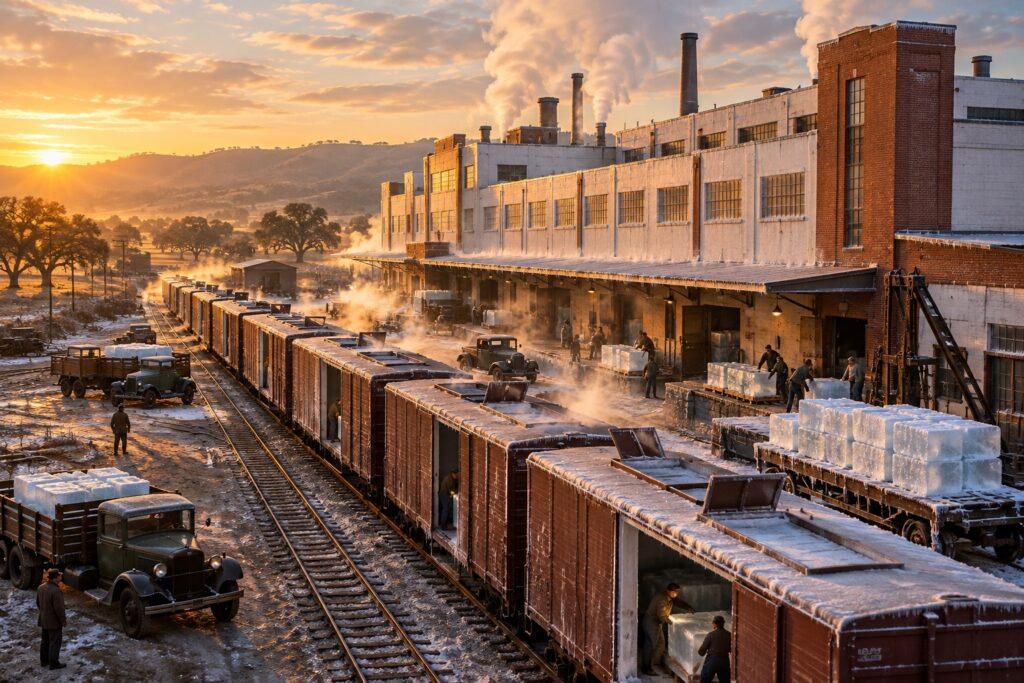
What is actually true: Both local histories say so. The city history says the Pacific Fruit Express plant doubled its cold storage in 1913, which “made the Roseville plant the largest ice plant in the world,” and the Roseville Historical Society calls it “the largest ice manufacturing plant in the world.” In 1963 as many as 900 refrigerator cars a day pulled up to its icing platforms, and in the mid-1960s it made 925 tons of ice a day. Mechanical refrigerator cars made it unnecessary, and it was torn down in the spring of 1974. We found no worldwide comparison from the time, so “largest” rests on those two local sources. Sources: City of Roseville: History of Roseville
Roseville Historical Society: Railroad
The Editors’ TakeProbably True
The largest ice plant in the world sounds like a brag off a diner placemat, yet two local histories both say it. The number we keep coming back to is 900 refrigerator cars a day pulling up to the icing platforms in 1963. The one hole is that we found no worldwide comparison from the time, so we trust it the way we trust a neighbor who knows the block. Then mechanical refrigerator cars arrived, and by spring of 1974 the plant was gone.
It was 6 to 2 for Probably True, and the 2 still want Partly True until a worldwide comparison turns up.
Try this: Read the Historical Society’s Railroad page for the 1960s ice numbers, then judge the claim yourself.
Where to read more: Roseville and the Railroad
The First Engine Is Still Around
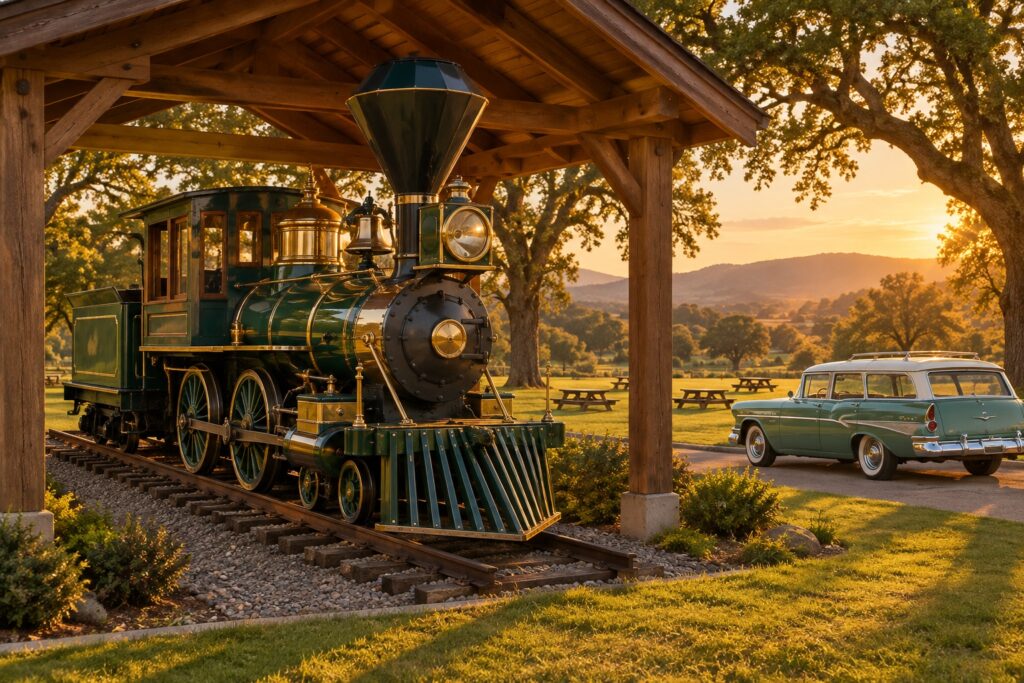
What is actually true: True. On April 6, 1864, the city history says, the locomotive Governor Stanford left the foot of J Street in Sacramento with passengers for the 18-mile trip to “Junction,” the crossing that became Roseville. The same wood-burning engine is “now on permanent display at the California State Railroad Museum in Sacramento.” The museum’s exhibits page lists it as Gov. Stanford, Central Pacific No. 1. Sources: City of Roseville: History of Roseville
California State Railroad Museum: Exhibits on View
The Editors’ TakeProbably True
Rare treat: the story is simply right. The Governor Stanford left Sacramento on April 6, 1864, bound for the crossing called Junction, and the same wood-burning engine now sits in the California State Railroad Museum. We keep picturing a town that started as a stop on that 18-mile run. Nothing here makes us squint, which is almost suspicious in a legend.
Nobody argued. All 7 editors said Probably True and went to lunch.
If you go: The museum lists it as Gov. Stanford, Central Pacific No. 1 on its exhibits page; check what is on view before you drive to Sacramento.
Where to read more: Roseville and the Railroad
The Biggest Rail Yard in The West
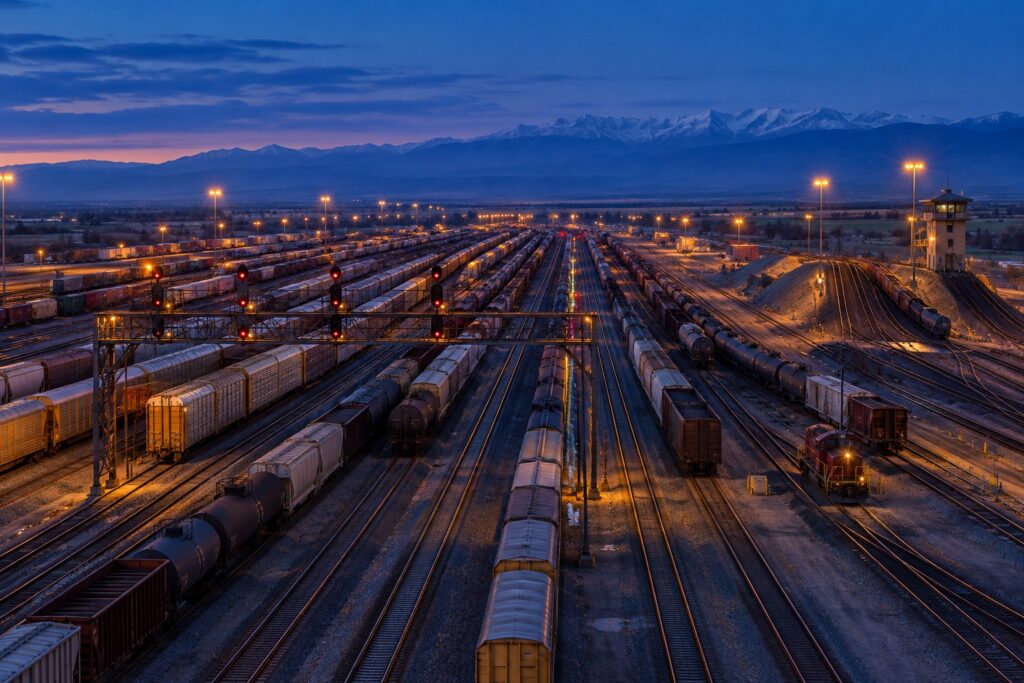
What is actually true: That is what Union Pacific says. In 2013 the railroad called J.R. Davis Yard “the largest rail yard west of the Rockies” and said 98 percent of the region’s rail traffic flows through it. Amtrak says it grew to become “the largest rail yard in California.” Union Pacific gives two sizes: 780 acres after the 1999 rebuild and “6-mile, 950-acre” in 2013. Back in 1952, the city history says, Southern Pacific’s new Jennings Yard made Roseville “the largest and most up-to-date rail terminal west of Chicago.” We found no independent ranking. Sources: Union Pacific: Roseville Leaders Tour Largest Rail Yard in the West (2013)
Union Pacific: Train Town, Roseville, CA
Amtrak Great American Stations: Roseville, CA
City of Roseville: History of Roseville
The Editors’ TakePartly True
Union Pacific called J.R. Davis Yard the largest rail yard west of the Rockies in 2013, and Amtrak says it is the largest in California. Those are the people who run the place talking, and we found no independent ranking. Even the size wobbles between 780 acres after 1999 and 950 acres in 2013. So we will say it is huge, loudly, and keep the exact rank quiet.
A close one, 4-3, for Partly True. The 3 on the other side point out that two railroads have called the yard the largest.
If you go: Read Where to Watch Trains in Roseville Safely before you pick a spot to stand.
Where to read more: Where to Watch Trains in Roseville Safely
The Steam Engine That Fought Forest Fires

What is actually true: True. The Roseville Historical Society says Southern Pacific No. 2252 was built in 1897 by Cooke Locomotive & Machine Co., hauled freight over Donner Pass, and in 1929 “was selected to fight snow-shed, brush and forest fires.” It was retired in 1956 after nearly three decades of firefighting. In 2004 the 70-ton engine was moved from the Placer County Fairgrounds to its display site on Atlantic Street, where Vernon Street begins. A restored rotary snowplow now stands beside it. Sources: Roseville Historical Society: Other Monuments
Union Pacific: Train Town, Roseville, CA
The Editors’ TakeProbably True
A steam engine with a second career as a firefighter is the best kind of true. Southern Pacific No. 2252, built in 1897, was picked in 1929 to fight snow-shed, brush and forest fires, and it kept at it until 1956. Nearly three decades on the fire line is more than most of us give a job. It stands today on Atlantic Street where Vernon Street begins, and a thank-you seems fair.
Unanimous, 8 votes for Probably True, with no dissent to report.
If you go: Look for the restored rotary snowplow parked right beside the engine.
Where to read more: Where to Watch Trains in Roseville Safely
When HP Outgrew The Railroad

What is actually true: True for 1999. The city history says that by 1999 Hewlett-Packard employed over 4,400 people at its North Roseville sites, “making it the number one employer in Roseville and Placer County,” and that HP employed about 7,000 at its peak. The railroad’s own peak was about 6,000 workers in the 1940s and 1950s, Union Pacific says. By the end of the 2010s HP was closer to 2,000 in Roseville. Sources: City of Roseville: History of Roseville
Union Pacific: Train Town, Roseville, CA
The Editors’ TakeProbably True
This one holds up for 1999, and it is a little humbling. By then HP employed over 4,400 people at its North Roseville sites, the top employer in the city and Placer County, and about 7,000 at its peak. The railroad’s own peak was around 6,000 workers in the 1940s and 1950s, so the town has had two giant employers in two eras. The 2,000 or so HP jobs by the end of the 2010s are the part that makes us go quiet.
6 editors sided with Probably True; the other 2 wanted Partly True because 1999 is only one year.
Try this: Read the HP era history page for the story behind these numbers.
Where to read more: Hewlett-Packard in Roseville
Questions People Ask
Are these stories true?
Some parts are and some are not. Each card is followed by what the records show, so you can see which parts are documented and which are only told.
Where are the legends on the site?
Each one sits on the history page for the place it belongs to, from the rail yard to Old Town and the Carnegie Library. Read it there or here; your collection is kept on this device only.
Sources
- Amtrak Great American Stations: Roseville, CA
- California State Railroad Museum: Exhibits on View
- City of Roseville: History of Roseville
- Roseville Historical Society: Buildings
- Roseville Historical Society: Haunted Historic Walking Tour
- Roseville Historical Society: Legacy
- Roseville Historical Society: Other Monuments
- Roseville Historical Society: Railroad
- Union Pacific: Roseville Leaders Tour Largest Rail Yard in the West (2013)
- Union Pacific: Train Town, Roseville, CA
Checked October 29, 2026 by It’s Roseville. Cite this page: It’s Roseville (itsroseville.com), checked October 29, 2026. Free to quote with a link.